Tobacco budworm difficult to control in geraniums

Q: I have two pots of geraniums facing the morning sun under a covered patio. The sun moves away at about 10 a.m. They look fairly good. I am watering them three times a week and temperatures are 101 to 111 degrees during the day. The plants have beautiful green leaves but they have holes in them. What’s causing this and what can I do to help minimize or eliminate the holes?
A: Tobacco budworms are probably causing the holes in the leaves. It is a close relative of the tomato fruitworm and the corn earworm. These are virtually the same insect but infest different plants causing a lot of damage.
Tomato fruitworm and corn earworm are not difficult to control with organic sprays such as Bt and Spinosad. However, tobacco budworm may be harder to control in geraniums.
The tobacco budworm normally attacks the flowers and causes the plants to stop blooming. It is also a problem in petunias. But if there are no flowers to attack, they could go after leaves.
This is the larva or “worm” of a moth so you can use either Bt or Spinosad sprays on the leaves. I think Spinosad will give you better control in this particular instance.
You can also try using a soil drench, since they live part of their lives in the soil, and spraying the foliage with a synthetic pyrethrum product. These are insecticides that have an active ingredient on the label ending in “thrin.”
One of these products, or all of them, should give you some control and they are good products to have on hand for vegetable gardens, fruit trees and landscape plants, too.
Q: I have a problem in raised beds I never had before. I can’t get seeds to germinate in two of them this year. I have grown produce in them before and the only difference is that I added a lot of oak leaves and clippings from my sage plants this year. I purchased new seeds and replanted but nothing is coming up.
A: The oak leaves and sage clippings would have little effect on the germination of vegetable seeds. If it had an effect, you’d see uneven germination of the seed, not failure. If you are trying to germinate vegetable seeds in the middle of our hot summer in full sun, the usual problem is the soil dries too quickly and prevents seeds from germinating.
Seeds must stay wet for several hours in order to start the germination process. If you are going to plant seeds during hot weather, plant them at dusk and water them in thoroughly so that the seeds have all night to absorb water before the heat of the following day.
This time of year water can be lost from soil at a rate of more than 4/10 of an inch a day. Seeds, small seeds in particular, are covered with a very shallow layer of soil. Unless you are watering that soil several times a day, the soil and the seed will dry out quickly causing germination failure.
Covering the soil with shade may be enough to get the seeds to germinate. I use horse bedding or straw to cover the soil after seeding during summer months so that the soil does not dry out so rapidly.
Horse bedding and straw are porous, but they also shade the soil and slow evaporation. I like horse bedding more because it can be turned under at the end of the growing season more easily than straw and it decomposes faster.
With large seeds such as corn, peas or beans, soak the seeds for several hours indoors before planting them outdoors. Again, plant at dusk during hot summer months, not in the morning.
You can “pregerminate,” or soak very small seed and water but it is more difficult. The seed is soaked in water for several hours and then dried on paper towels so it can be spread by hand. The seed must absorb water but the seed should not yet sprout.
Allowing the surface of the seed to dry will not kill the seed. But the seed should be planted very soon after drying. It is possible that you will kill the seed if you soak it in water, dry it and then wait several hours to plant it.
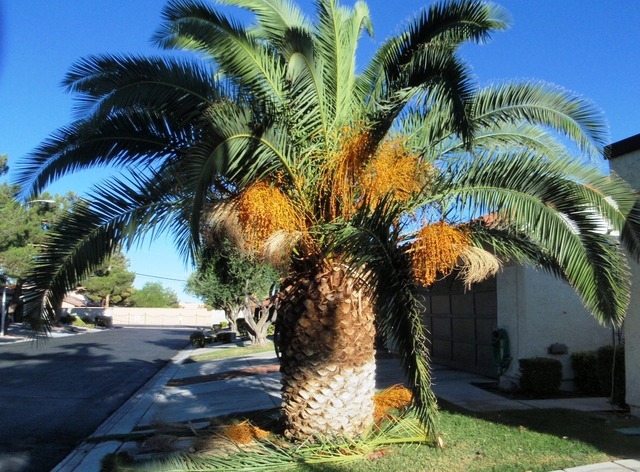
Q: My palm trees continuously produce berries. I keep cutting them off but they come back. Even the new 1-year-old palms I planted have green berries on them. Is there any way to keep them off? Are there palms that do not produce berries?
A: Production of these berries or fruits and dropping them on the ground occurs naturally every year on all palms. They produce flowers on long stalks, the flowers become fruits or berries and they drop from the tree and litter the ground.
This is a major downside to palms growing near swimming pools. Once a palm is old enough for flowering, it will continue to flower and fruit every year.
You can’t prevent the sequence of events leading up to the production of these berries. There are no chemicals you can apply to prevent this from happening.
But you can do this: When it is ready to begin flowering you will see stems growing from the trunk. When they are long enough, cut off them off with a pruning shears.
Cutting off these flower stems prevents the production of fruit and will not harm the palm. If the palm is too tall, use a pole pruner to cut them off or a ladder and a loppers.
If you want it done commercially, coordinate the pruning of your palm at the same time it produces flowers and cut them off at the same time the palm is pruned.
Q: I like to decorate my backyard with trellises and would like to grow vegetables vertically. Are there some late-season vegetables I can train up my trellises for fall and winter harvest and when should I plant them?
A: Growing plants vertically is a good space saver for smaller backyards and lets you concentrate production in a smaller area. Allowing vegetable plants with soft fruits, such as tomatoes, to sprawl on the ground increases fruit losses perhaps as much as 30 percent of total yield.
Some vegetables to trellis when temperatures cool off toward September include pole beans, with two of my favorites being Kentucky Wonder and Blue Lake. These are very old varieties that have wonderful flavor. They are also available as bush types but I still think the flavor is better when these varieties are grown on poles or trellises.
Don’t forget to try pole peas such as sugar snap where you can eat the pod and the peas together. Another favorite pole pea of mine for taste is Lincoln. It can be trellised or grown as a bush, a very prolific producer with great flavor. If you want edible pea pods, then I would recommend Mammoth Melting.
I also like yardlong beans for growing on trellises. Yardlong beans tend to like warmer weather so planting early should not be a problem. One of the most common varieties of yardlong beans is asparagus.
I’d also recommend the scarlet runner bean. It has beautiful red flowers, the pods are edible or you can shell them when they are fully mature.
Next year, for fun, grow loofa squash which is edible when the fruit is young, about 8 to 10 inches long; the fully mature gourd is the “loofa sponge.” It produces some long vines that can be trellised if you started early in the growing season.
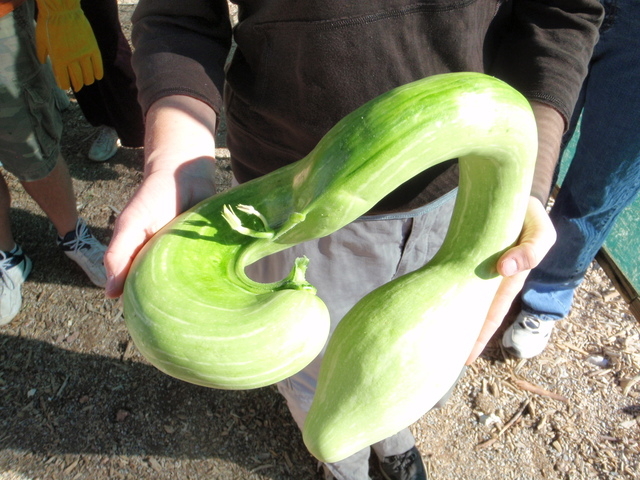
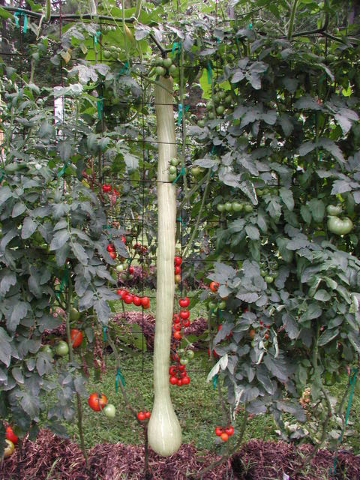
Another fun one is the trumpet or trumbetta squash, which produces a 6-foot squash that is long and straight when trellised and coiled when grown on the ground.
Bob Morris is a horticulture expert living in Las Vegas and professor emeritus for the University of Nevada. Visit his blog at xtremehorticulture.blogspot.com. Send questions to extremehort@aol.com.